
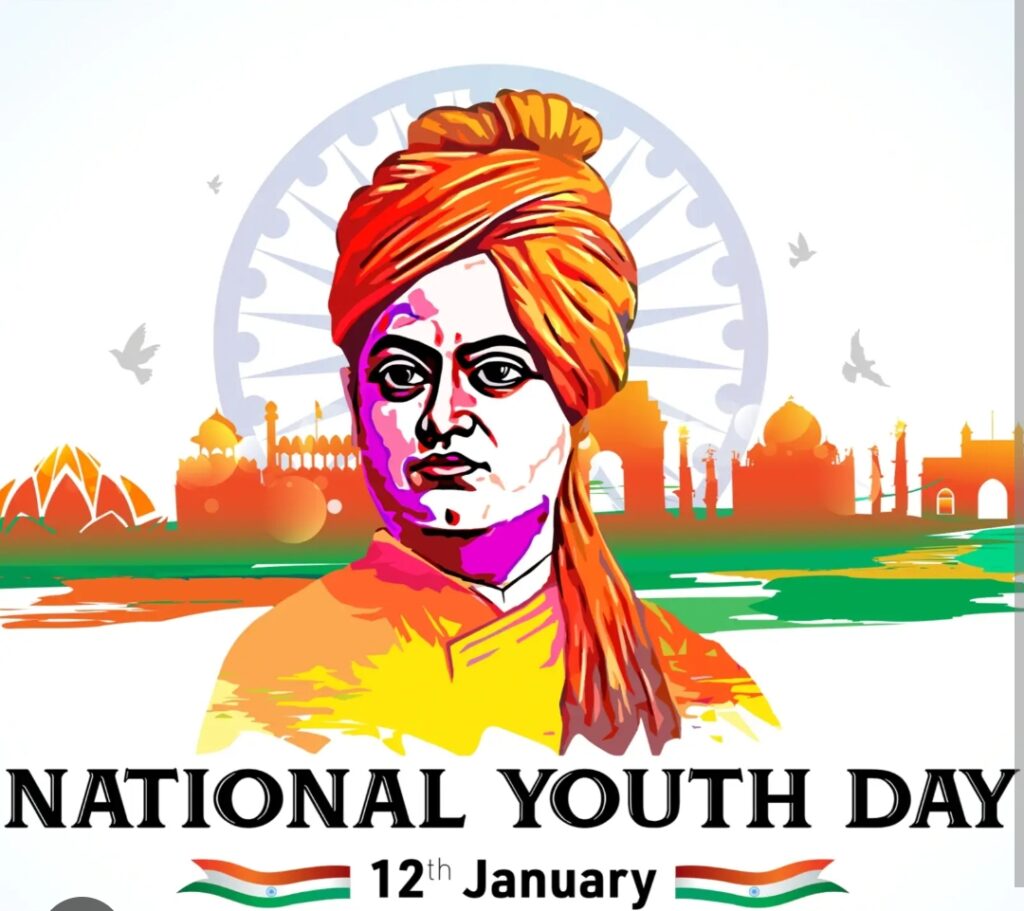
National Youth Day 2026 serves as a pivotal moment for India to honor the 163rd birth anniversary of Swami Vivekananda, the iconic monk who revolutionized Indian spirituality and youth empowerment. This report explores the historical significance, the core teachings of Vivekananda, and the massive logistical framework of the 2026 celebrations centered around the Viksit Bharat Young Leaders Dialogue.
A URL Slug: national-youth-day-2026-swami-vivekananda
Meta Description: National Youth Day 2026 marks Swami Vivekananda’s 163rd birth anniversary. Explore the VBYLD event, the 2026 theme ‘Ignite the Self’, and youth empowerment strategies.
The Genesis of Rashtriya Yuva Diwas:
The observance of National Youth Day, also known as Rashtriya Yuva Diwas, is a tradition that began in the mid-1980s. The Government of India, recognizing the immense demographic potential of the country, sought an icon who could bridge the gap between ancient wisdom and modern ambition. In 1984, the government officially declared January 12—the birth anniversary of Swami Vivekananda—as National Youth Day.
The inaugural celebration took place in 1985, and for over four decades, it has served as a platform to propagate the ideas and values of Vivekananda. The primary objective behind this declaration was to motivate young people by connecting them to the ideals for which Vivekananda lived and worked. The government felt that his philosophy of strength, discipline, and national pride was essential for the character-building of future generations.
- 1863: Birth of Swami Vivekananda, Inception of the youth icon’s journey in Kolkata
- 1984: Government Notification, Formal declaration of National Youth Day
- 1985: First Celebration, Start of nationwide youth festivals and activities
- 2026: 163rd Birth Anniversary, Focus on ‘Ignite the Self, Impact the World’ theme.
The choice of January 12 was symbolic. It marked the arrival of a “great soul” who personified the restless quest for truth and the eternal energy of the youth. Today, with nearly 40% of India’s population falling into the 15-29 age category, the day acts as an essential reminder of the role youth play in shaping the nation’s destiny.
The Life and Times of Swami Vivekananda:
Born as Narendranath Dutta on January 12, 1863, in Kolkata, Swami Vivekananda was the son of Vishwanath Dutta, a prominent lawyer, and Bhuvaneshwari Devi. From a young age, Narendranath was a sharp child who excelled in academics and possessed a curious, restless mind. Growing up during the British colonial era, he witnessed the social and spiritual turmoil of India, which fueled his desire for higher truth.
His encounter with Sri Ramakrishna Paramahansa was the defining moment of his life. Initially a skeptic, Narendranath was transformed by the profound spiritual depth and simplicity of his guru. He took Ramakrishna as his spiritual guide and eventually took monastic vows, becoming Swami Vivekananda. After the passing of his guru, Vivekananda traveled extensively across the Indian subcontinent to understand the lived reality of the masses.
The Global Ambassador of Vedanta:
The world recognized Vivekananda’s genius at the 1893 World’s Parliament of Religions in Chicago. His opening words, “Sisters and brothers of America,” earned him a standing ovation and introduced Indian philosophies like Yoga and Vedanta to the Western world. He argued that all religions lead to the same truth and emphasized universal brotherhood.
Vivekananda’s mission was not just spiritual but social. He founded the Ramakrishna Math and the Ramakrishna Mission to serve humanity through education and healthcare. He believed that “service to man is service to God,” a principle that remains at the heart of National Youth Day celebrations. Despite his short lifespan—passing away at 39 in 1902—his impact on the modern Indian Renaissance was monumental.
Core Teachings: A Blueprint for Modern Youth:
Vivekananda’s teachings are often described as “man-making education,” focusing on the holistic development of the mind, body, and spirit. He believed that the strength of a nation lies in the character and confidence of its young population. In the digital age of 2026, his advice on self-belief and concentration is more relevant than ever.
Self-Confidence and Fearlessness:
One of the core tenets of his philosophy is the power of self-belief. He famously said, “Faith in ourselves and faith in God—this is the secret of greatness”. He urged the youth to reject inferiority complexes and recognize the infinite power within them. For Vivekananda, fear was the greatest cause of failure, and he encouraged individuals to face challenges head-on.
Concentration: The Essence of Knowledge:
Vivekananda viewed concentration as the primary tool for success in any field, whether spiritual or worldly. He advocated for techniques to master focus through controlled breathing and single-minded attention. In an era of constant distractions, his teaching that “the mind is like water; when it’s calm, everything becomes clear” provides a practical strategy for students and professionals alike.
Education: Man-making and character building, Focus on NEP 2020 and life skills.
Spirituality: Universal brotherhood Global cooperation and social harmony.
Physical health: Muscles of iron and nerves of steel ,Fitness, sports, and mental well-being .
Service: Shiva Jnana Jiva Seva Volunteering, NSS, and community work.
National Youth Day 2026: Theme Analysis:
The theme for National Youth Day 2026 is “Ignite the Self, Impact the World”. This theme encapsulates the belief that personal transformation is the prerequisite for social change. It draws directly from Vivekananda’s vision of youth as the driving force behind a progressive nation.
“Igniting the self” refers to the process of self-realization, building inner strength, and developing a growth mindset. It encourages young people to awaken their potential through discipline and values. “Impacting the world” involves translating this inner strength into purposeful action for the benefit of society and the nation. This alignment of personal growth with national service is the cornerstone of the 2026 celebrations.
The Viksit Bharat Young Leaders Dialogue (VBYLD) 2026:
The flagship event for National Youth Day 2026 is the second edition of the Viksit Bharat Young Leaders Dialogue (VBYLD), held in New Delhi from January 10 to 12. This massive initiative, spearheaded by the Ministry of Youth Affairs and Sports, aims to modernize the tradition of the National Youth Festival.
VBYLD 2026 brings together 3,000 young participants selected through a rigorous, merit-based process from across the country. The event provides a platform for these young leaders to present their innovative ideas directly to the nation’s leadership. The dialogue focuses on empowering youth to participate in national activities and contribute to the vision of a developed India by 2047.
Competitive Tracks and Participation:
The 2026 celebrations feature several distinct tracks to engage youth from various backgrounds:
- Viksit Bharat Challenge Track: 1,500 participants chosen for their problem-solving skills and national vision.
- Cultural & Design Track: 1,000 participants who showcase the creative and artistic potential of the youth.
- International Youth Delegates: 100 participants from BIMSTEC countries and the Know India Programme, reflecting the global reach of Vivekananda’s message.
- Experts and Mentors: 400 specialized participants who provide guidance and mentorship to the young delegates.
Thematic Tracks for National Development:
During VBYLD 2026, young leaders engage with ten thematic tracks that align with national priorities. These tracks are designed to encourage youth-led perspectives on areas critical for a “Viksit Bharat”.
One significant track is “Youth in Democracy and Government,” which encourages ethical engagement in civic processes. Other tracks focus on “Innovation with Tradition,” “Sustainable and Green Bharat,” and “Making India the Startup Capital of the World”. These themes highlight that the youth are not just beneficiaries of development but are the architects of the future workforce and economic engine.
The “Hack for Social Cause” track is particularly notable, empowering youth aged 18-29 to build technology-driven solutions for rural development, healthcare, and education. Winning entries from these tracks receive mentoring from industry experts, providing a bridge between theoretical ideas and practical implementation.
Institutional Synergy: NSS, NCC, and National Youth Policy:
National Youth Day is supported by a robust institutional framework, including the National Service Scheme (NSS) and the National Cadet Corps (NCC). The NSS, established in 1969, operates with the motto “Not Me, But You,” which mirrors Vivekananda’s teaching of selfless service. These organizations conduct community service programs, blood donation drives, and awareness campaigns as part of the National Youth Week (January 12-16).
In 2026, the focus is also on the Draft National Youth Policy (NYP) 2024. This policy outlines a ten-year vision for youth development, focusing on five key areas:
- Education and Employment: Enhancing career and life skills in alignment with NEP 2020.
- Youth Leadership: Strengthening volunteering opportunities and using technology for empowerment.
- Health and Wellness: Promoting physical fitness and mental health awareness.
- Social Justice: Ensuring safety and support for marginalized youth populations.
- Inclusive Growth: Achieving youth development goals by 2030 through sustainable practices.
Mental Health and Well-being in the Digital Era:
A significant component of National Youth Day 2026 is the emphasis on mental health. Today’s youth face unique challenges, including social media influence, academic pressure, and the quest for instant success. Experts argue that mental strength, a key teaching of Vivekananda, is the true sign of success in the modern world.
To support young people, New Delhi-based psychiatrists and health organizations have shared daily mental health routines inspired by Vivekananda’s teachings. These habits include beginning the day with five minutes of quiet reflection instead of reaching for a phone, engaging in 15-20 minutes of physical movement to release endorphins, and practicing “mindful breaks” during work or study to prevent burnout.
Youth as Architects of the Future:
India’s demographic dividend is a powerful tool for global progress. With over 600 million young people, the country has the potential to lead in digital innovation, sustainable development, and geopolitical stability. National Youth Day 2026 serves as a reminder that this potential can only be realized if the youth are ethically guided and properly empowered. Swami Vivekananda believed that education was not just the amount of information but a “life-giving, man-making, character-building assimilation of ideas”. This vision continues to inspire young entrepreneurs, civil service aspirants, and social activists to align their personal goals with the national interest. The 2026 celebrations emphasize that every youth has the capability for greatness if they follow the path of discipline, self-awareness, and service
Conclusion
National Youth Day 2026 is a celebration of the boundless potential inherent in the youth of India. By honoring Swami Vivekananda, the nation reaffirms its belief that a strong future is built on the foundation of character, confidence, and service. The “Ignite the Self, Impact the World” theme provides a clear roadmap for the young generation to become responsible citizens and active contributors to social change.
Through platforms like the Viksit Bharat Young Leaders Dialogue and institutions like the NSS, the spirit of Vivekananda continues to guide the nation toward the goal of Viksit Bharat 2047. Ultimately, National Youth Day is a call to action for every young Indian to “Arise, Awake, and stop not until the goal is reached”.
